Data & measurement

Cart abandonment in Mexico: the four reasons behind the 84%

In Mexico, 84% of online shopping carts get abandoned before checkout, according to AMVO's 2026 Online Sales Study. It is not one problem: shipping cost, limited payment methods, distrust, and a poor mobile experience each call for a different recovery message, not the same generic reminder for everyone.

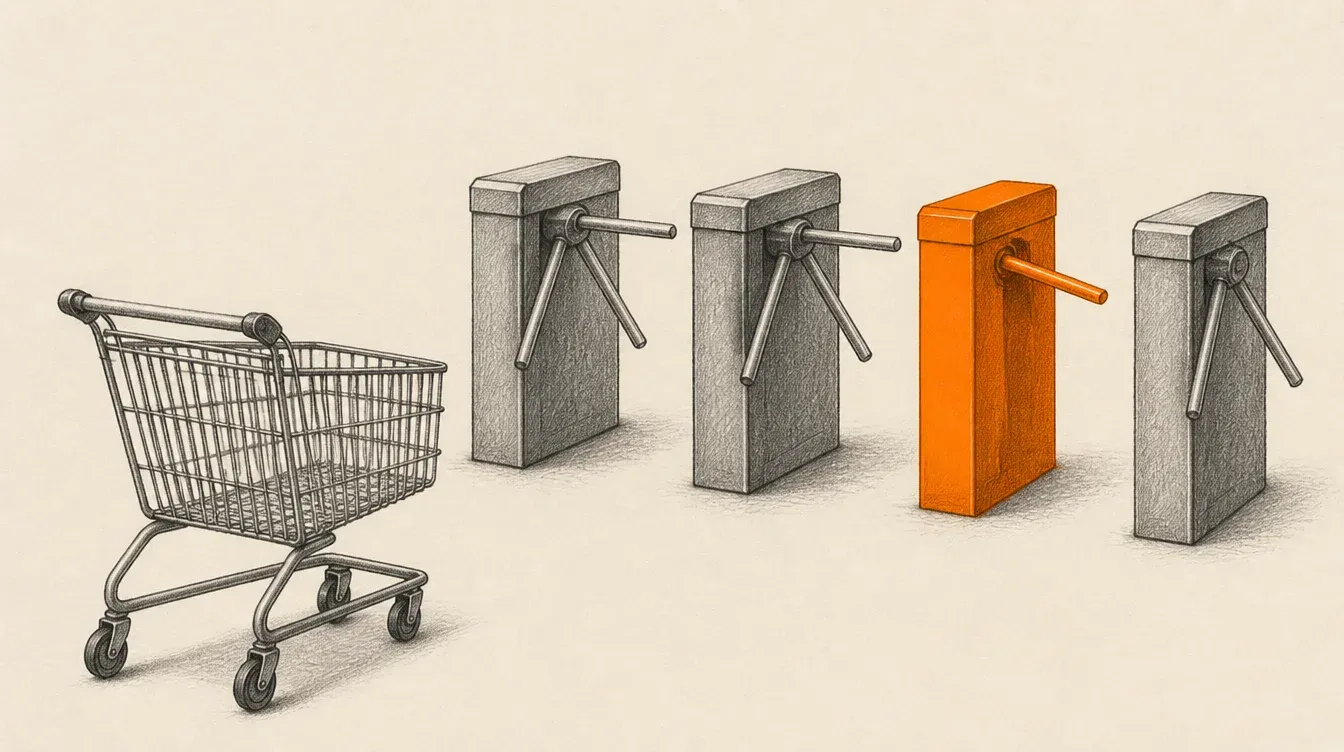
A graphite shopping cart facing four turnstiles in a row, three shut and grey, one open and marked in solid orange

What matters

  • 84% of shopping carts in Mexico get abandoned before checkout, according to AMVO's 2026 Online Sales Study.
  • AMVO identifies four distinct causes: high shipping cost, limited payment methods, buyer distrust, and a poorly optimized mobile experience.
  • The checkout step where a visitor drops off, plus the device used, is enough to tell the reason apart without asking the customer.
  • A single recovery message for everyone who abandons fixes one reason well and leaves the other three unaddressed.

In Mexico, 84% of online shopping carts get abandoned before checkout, according to the 2026 Online Sales Study from the Mexican Association of Online Sales (AMVO). It is a number that looks alarming until you look closer: it is not one problem, it is at least four, and each one calls for a different response than the one almost everyone uses, a single “you left something in your cart” email.

The 84% mixes four different reasons

AMVO identifies four reasons behind the abandonment: limited payment methods, buyer distrust, poorly optimized mobile experiences, and consumers who use the store to search and compare without immediate purchase intent. High shipping cost remains the number one reason within the site itself. Four causes, four different customers: the one who hesitated over paying by card does not need the same message as the one who was just comparing prices, and neither needs the same thing as the one who left the moment they saw the shipping cost at checkout.

How to tell the reason apart without asking the customer

Most of this information already lives in the abandonment event itself, no survey required:

  1. Measure the checkout step where the visitor left. If abandonment clusters at the shipping screen, the problem is cost, not trust. If it clusters at payment, you are missing options (cash on delivery, installments, local wallets).
  2. Cross abandonment with device. An abandonment rate much higher on mobile than desktop signals experience friction, not price.
  3. Separate first-time visitors from repeat ones. A new visitor who abandons on first contact was probably comparing, not deciding; that profile does not respond to a coupon, it responds to content that resolves doubt (reviews, guarantees, delivery times).
  4. Test the recovery message by reason, not one for the whole list. The shipping-cost abandoner responds to a free-shipping threshold; the payment-hesitant one responds to seeing the option they were missing, not a generic discount.

Treating the 84% as a single number is the same trap as lumping acquisition, conversion and retention into one revenue line: it hides that completely different profiles are mixed into the same figure. It is the diagnostic work we do in data-driven growth in Mexico: before sending more traffic to the same checkout, confirm which of the four reasons is actually costing sales.

If your abandoned cart flow is one identical email for everyone, you are probably solving one reason well and none of the other three.

Frequently asked questions

Why do so many shopping carts get abandoned in Mexico?

The 2026 AMVO Online Sales Study found that 84% of digital shopping carts in Mexico get abandoned. The main causes are high shipping cost, limited payment methods, buyer distrust, and a poorly optimized mobile experience, plus visitors who are only comparing without immediate purchase intent.

Does it help to send the same abandoned cart email to everyone who did not buy?

Not always. A visitor who dropped off over shipping cost responds to a free-shipping threshold; one who hesitated over payment method responds to seeing the option they were missing, not a discount. Treating all four reasons with one message fixes one of them well and leaves the other three unaddressed.

How do I know which of the four reasons is behind a specific abandonment?

It shows in data the abandonment event already carries: the checkout step where the visitor left (shipping or payment), the device (mobile or desktop), and whether it was a first visit or a repeat one. Those three signals are enough to separate the reason without asking the customer directly.

Keep reading

Data & measurement 2 min read

Attribution models: why last click is lying to you

Last click gives all the credit to the channel that closes and none to the one that created the demand. What each model rewards and which one fits your decision.

All topics

×
Hi! 👋

How can we help you today?

Please write a message first.