Data & measurement

Cyber Monday Argentina: record revenue does not mean record margin

Argentina's 2025 Cyber Monday booked $639 billion pesos, up 29% from 2024, but with the highest average discount since 2021 (31%, per CACE). A revenue record built on a deeper discount is not the same as a margin record: you have to separate how much growth came from customers and how much came from selling cheaper.

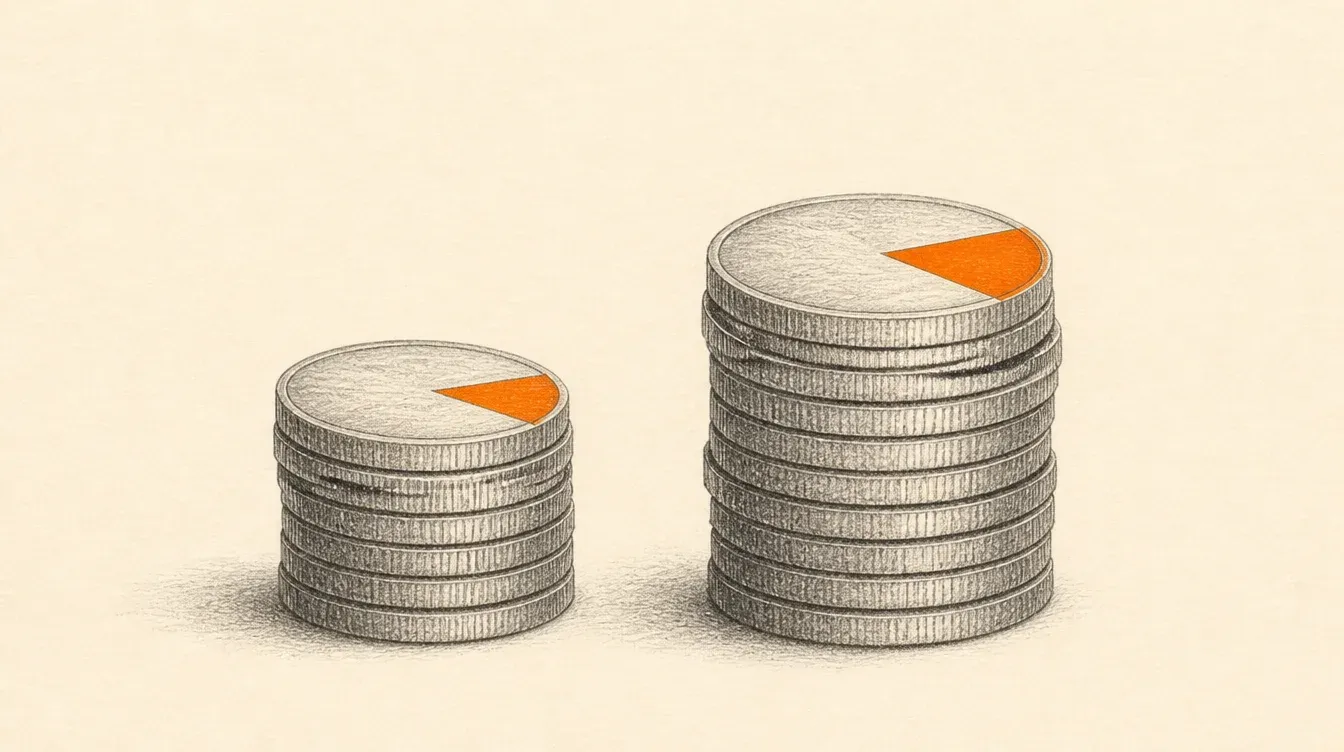
Two stacks of coins in graphite, the one on the right taller than the one on the left, each with a solid orange wedge cut out of the top coin, the wedge on the right bigger than the one on the left

What matters

  • Argentina's 2025 Cyber Monday booked $639 billion pesos (+29% vs. 2024), with the highest average discount since 2021: 31%, per the Argentine Chamber of Electronic Commerce (CACE).
  • Orders grew 24% and units sold grew 15%, two different rates worth comparing against your own customer growth, not just the event total.
  • An average order value ($92,000 pesos in 2025) that grows slower than the discount offered is a sign the customer bought cheaper, not more.
  • Measuring the campaign's gross margin, net of discount cost, is the only way to confirm the revenue record survives without the discount doing the work.

Every Cyber Monday in Argentina closes with the same headline: record revenue. 2025 was no exception, with $639 billion pesos sold, up 29% from 2024, according to the Argentine Chamber of Electronic Commerce (CACE). What that headline leaves out is that the average discount was also a record: 31%, the highest since 2021. When revenue climbs at the same time the discount gets deeper, before celebrating you have to separate how much of that growth is new business and how much is margin walking out the same door.

A revenue record can hide a worse year on margin

Revenue measures how much came in, not how much stayed. If an event’s average discount rises year over year, every sale leaves less margin per unit even as volume grows: in 2025 orders rose 24% and units sold rose 15%, but the discount that made them possible also climbed to its highest level since 2021. A 29% jump in revenue alongside a similar jump in discount depth can mean a brand sold more pesos but cheaper relative to list price, which is the opposite of what the headline celebrates.

How to separate growth from customers versus growth from discount

  1. Compare your own order growth against your unique customer growth for the event. If orders grow faster than customers, most of that jump is the same base buying more times, not new customers.
  2. Check your own average order value against the event’s overall figure ($92,000 pesos in 2025, per CACE) and against your own prior year. An order value that grows slower than the discount you offered is a sign the customer bought cheaper, not more.
  3. Measure the campaign’s gross margin, net of discount cost, before comparing it to last year. It is the only way to confirm the peso growth survives without a deeper discount doing the work.
  4. Check whether the growth comes from new customers or from your existing base using the year’s biggest coupon. It is the same split behind separating acquisition, conversion and retention: a sale that was going to happen anyway, just with more discount, is not a sale you won.

Cyber Monday is still a real date to sell, just like Argentina’s Hot Sale: real demand moves on those days. The mistake is not joining, it is measuring only revenue and not margin, because a discount that keeps getting deeper can be buying the same growth last year got with less. Separating those two before planning the next campaign is part of the work we do in data marketing in Argentina.

Frequently asked questions

What does it mean that the average Cyber Monday discount hit a record in 2025?

It means products sold, on average, at a deeper markdown off list price than in previous editions. In 2025 the average discount in Argentina was 31%, the highest since 2021 per CACE. A deeper discount lowers margin per unit sold even when the event's total revenue grows.

How do I know if my Cyber Monday revenue grew from more customers or from a bigger discount?

By comparing your own order growth against your unique customer growth for the event, and your own average order value against last year's. If orders grow faster than customers and your order value grows slower than the discount you offered, most of that growth is the same base buying cheaper, not new customers.

Is it still worth joining Cyber Monday if the average discount keeps rising?

Yes, because it still concentrates real demand on those days. But the result should be measured in gross margin, not just revenue: subtracting the discount's cost before comparing against last year is what confirms whether the growth is real or just the same volume with a bigger coupon.

Keep reading

All topics

×
Hi! 👋

How can we help you today?

Please write a message first.