Data & measurement

Ordering Through Delivery Apps in Peru: Why That Customer Is Not Yours

Taking orders through Rappi, PedidosYa or DiDi Food gives a restaurant the order and the payment, but not the customer phone number or order history: that data stays inside the app. Per the platform own figures, more than 20% of the businesses partnered with Rappi in Peru are small businesses repeating that same dependency, order after order.

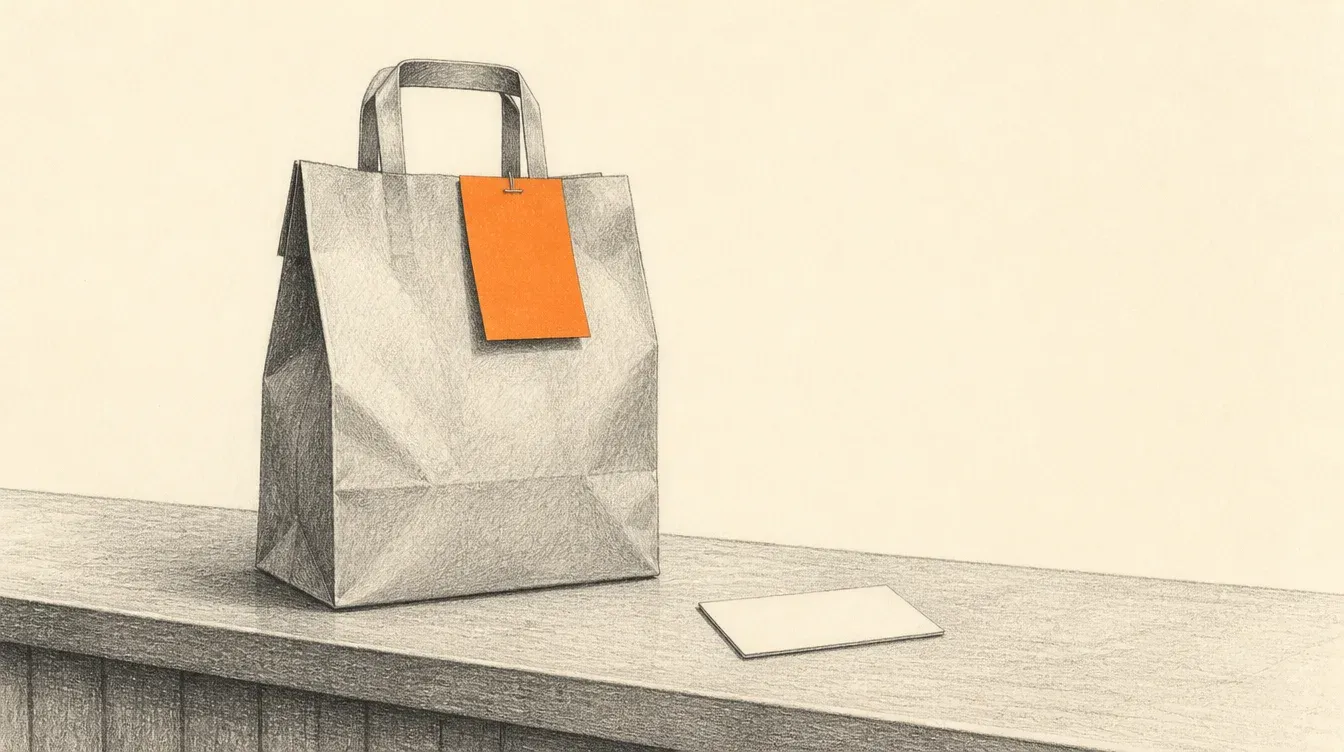
A graphite delivery bag with a solid orange order tag clearly visible on a counter, with no other data around it

What matters

  • More than 20% of the businesses partnered with Rappi in Peru are micro and small businesses, per the platform own figures, with categories like restaurants and dark kitchens growing up to 30% in the last year.
  • PedidosYa and Rappi lead food delivery downloads in Peru: 1,110,000 and 747,740 respectively in April 2026, per the Food & Drink category ranking cited by Infobae.
  • Communication between the customer and the restaurant runs through the app own chat: the phone number and order history never reach the business.
  • A coupon or a concrete reason to order directly next time is what turns part of that customer into a contact the restaurant actually manages.

A restaurant in Lima gets ten orders through Rappi on a Friday night. It charges all ten, delivers all ten, and on Monday has no way to tell any of those ten customers that a new dish launched this week. It did not lose the contact: it never had it. All that reached the restaurant was the order and the delivery address, not a phone number it can message on its own.

The app keeps the relationship, the restaurant keeps the order

Per the platform own figures, more than 20% of the businesses partnered with Rappi in Peru are micro and small businesses, with categories like restaurants and dark kitchens growing up to 30% in the last year inside the app. Rappi and PedidosYa also lead food delivery downloads in the country: 747,740 and 1,110,000 respectively in April 2026, per the Food & Drink category ranking cited by Infobae. Every new order coming through that channel is, for the app, a customer it already knows. For the restaurant, it is one more order with no name and no phone number: the conversation about that order runs through the app chat, not through a channel the business controls.

It is the same mechanic already covered for selling through Mercado Libre, applied now to food delivery: the sale closes the same way, but the data on who bought stays on the other side.

What to do with the part of the order that is actually yours

  1. Measure how much of your repeat orders come through an app versus your own WhatsApp or storefront. If most of it comes through Rappi or PedidosYa, your repeat-order rate is measuring how well the algorithm placed you that day, not how much the customer chooses you.
  2. Give the order a reason to come back through your own channel. A coupon for the next direct order, printed on the bag or the receipt, is the simplest way to move that contact to a channel you actually manage.
  3. Do not run the same loyalty loop on both channels. A customer who ordered through the app never left you their phone number: you cannot send them the same birthday message or win-back campaign you send to someone who ordered directly.

If your restaurant or food business depends on Rappi, PedidosYa or DiDi Food for most of its orders and you do not know how many of those customers you could recover as a contact of your own, that is the first number we measure in data marketing in Peru: how much of your base is actually yours before building any retention campaign on orders that, so far, belong to the app.

Frequently asked questions

Do delivery apps like Rappi or PedidosYa give the restaurant the customer phone number?

Not as a direct contact. Communication between the customer and the business runs through the app own chat, and the phone number, order history and preferences stay on the platform side. The restaurant receives the order and the delivery address, not a number it can message outside the app.

What percentage of the businesses on Rappi in Peru are small businesses?

More than 20% of the businesses partnered with Rappi in Peru are micro and small businesses, per the platform own figures, with growth of up to 30% in the last year in categories like restaurants and dark kitchens. For that slice of the business, the delivery order is usually the main sales channel, not a side one.

Should a restaurant stop selling through delivery apps to avoid losing the customer data?

Not necessarily: the app is still the fastest way to reach a new customer with payment, logistics and reviews already solved, something a small restaurant cannot build on its own overnight. The point is not to count that sale as owned customer base, and to give the customer a concrete reason, like a coupon inside the order, to move part of that relationship to a channel the business actually manages.

Keep reading

All topics

×

Hi! 👋

How can we help you today?

Please write a message first.