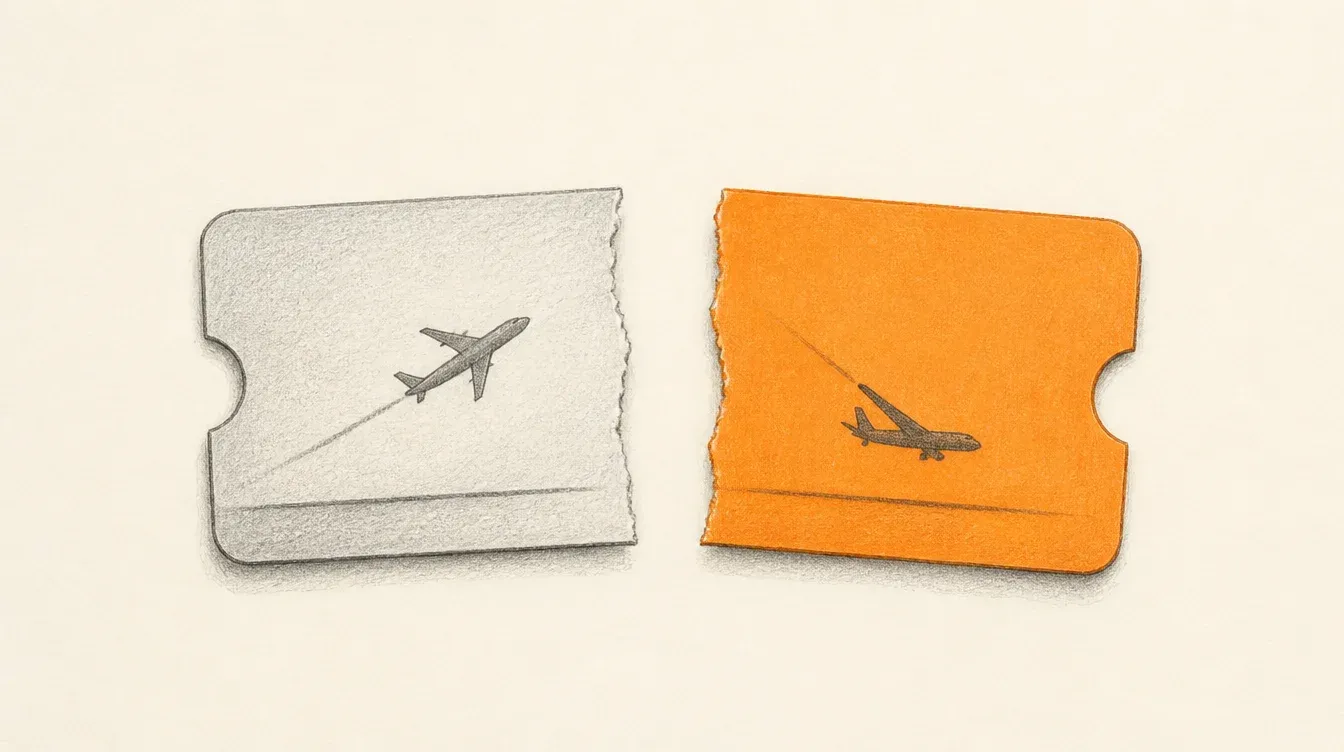
An airline sends the same welcome email to someone who booked a flight two months out and to someone who booked yesterday. Three days later, both get the same upgrade offer. The first has not flown yet, so the offer works. The second already flew, so the offer arrives late and reads as the brand not knowing when they flew.
The flight splits the message into two moments, not one
Before flying, passengers need operational certainty: that the itinerary is confirmed, when check-in opens, whether there was a schedule change, how much baggage is included. A sales message in that window competes with information the person is actually looking for, and loses. After flying, a different and much shorter window opens: the experience is fresh, it is the best time to measure satisfaction, and it is also when a cross-sell offer (car rental, hotel, travel insurance) makes sense, because the trip is now a completed fact rather than an intention.
Treating both moments as a single “post-purchase” stage produces the error in the example above: the same sequence reaches someone who has not flown yet and someone who already flew, with the same copy and the same commercial goal. At an airline and travel client we operate in Mexico, splitting these two moments by real itinerary data, not just purchase date, avoided exactly that: offering an upgrade to someone who had already flown the week before.
What to automate at each stage
- Booking confirmed. Full itinerary, baggage policy and check-in options. Zero selling: this is the message with the highest open rate, because it is the one passengers are waiting for.
- Days before the flight. A practical reminder (documents, arrival time at the airport) and, only then, a seat or extra baggage offer if the passenger has not flown yet.
- Right after the flight lands. A satisfaction survey triggered by the landing event, not by a fixed “three days after purchase” schedule.
- Weeks later. Reactivation for the next trip and cross-sell, segmented by destination and frequency: the offer for someone who flies once a year should not be the same as for someone who flies monthly.
It is the same principle behind building retention by lifecycle stage: the real customer event triggers the message, not the brand’s calendar. It is also the work we do in growth for Mexican brands: unifying itinerary and purchase data into a single profile so each message lands at the moment that fits it, not the one that is easiest to schedule.
If your post-purchase sequence sends the same offer to someone who has not flown yet and to someone who already flew, the problem is not the copy. It is that the message does not know what stage of the trip that person is in.