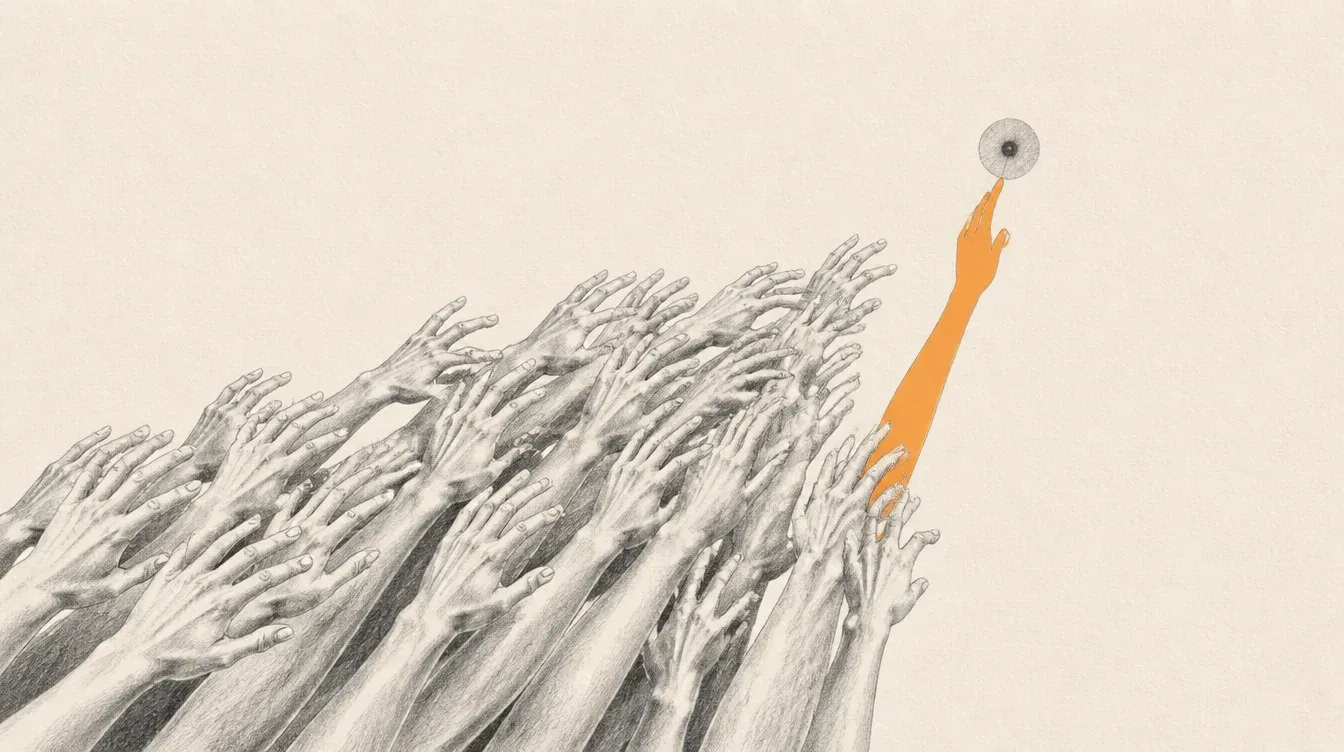
Buen Fin 2025 generated 219.2 billion pesos in sales in Mexico, a record that beat the official 200 billion peso goal, and ecommerce grew 31% year over year to make up 21% of that total, according to the Asociación Mexicana de Venta Online (AMVO). That growth is good news and the problem at the same time: it means more brands, with more budget, are going after the exact same shopper in the same fixed week on the calendar.
Why ads get more expensive for everyone, not just big spenders
An ad auction does not set a fixed price: advertiser demand for that same impression at that same moment sets it. When an entire category runs ads the same week, because Buen Fin has a fixed date and everyone knows it, the cost rises for anyone who participates, regardless of spend. It is the same mechanism behind why programmatic media buying in Mexico performs differently depending on what signals feed the algorithm: if the only lever is raising budget inside an auction the whole category is also raising, cost per acquisition moves with the market, not with the brand’s own strategy.
The demand that skips that auction
Before the event even starts, there is already an identified audience that does not need to compete for the year’s most expensive click:
- Last Buen Fin’s buyers. If someone bought from you during the previous edition that same week, they already showed their purchase cycle follows that calendar. Telling them by email or WhatsApp that the offer opened does not go through any bid.
- Carts and searches abandoned in the prior months. Someone who searched for a specific product in August or September without completing the purchase is the cheapest audience to recover in November: the data is already there, only the right-timed message is missing.
- Waitlists or price alerts, where the store has them: this is demand that asked to be notified, not demand you have to go find.
- New ad spend, reserved for whatever the owned base still does not cover. The part that owned audience does cover should not compete in the same auction as the rest of the category.
Demand is not evenly spread across the event itself either: in 2025, Monday, November 17 accounted for 26.1% of total sales, while Thursday the 13th, Buen Fin’s first day, was the lowest at 14.3% (AMVO). Spreading the same message and budget across all four days ignores that curve, the same way ignoring Mexico’s biweekly pay cycle leaves money sitting in low-conversion days.
Going into Buen Fin with an already-segmented owned base is the difference between fighting the year’s most expensive click and activating demand without fighting it. It is the same work behind our performance marketing practice in Mexico: ad spend performs better when it only competes for what the owned base cannot cover on its own.