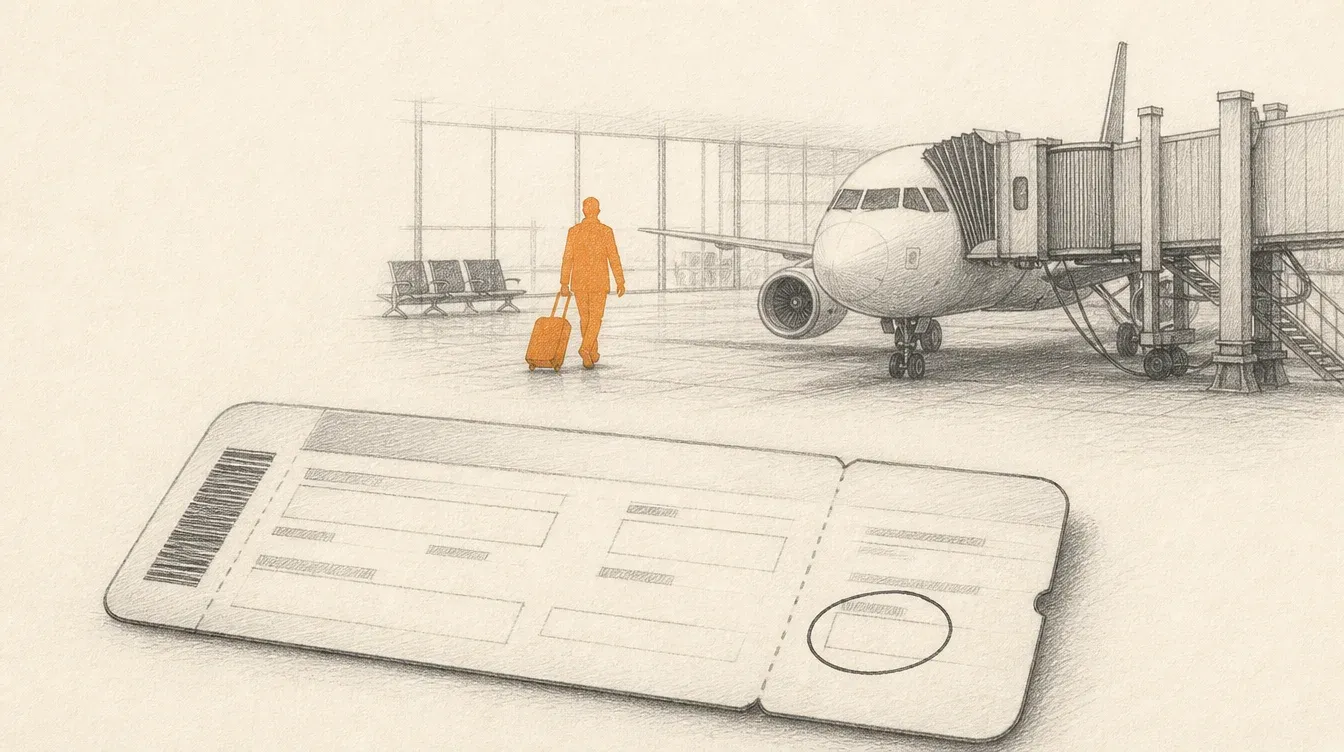
A flight booking confirms a seat, not a trip. The passenger can fail to show up at the gate because of something unexpected, a change of plans, or simply another flight leaving earlier, and that no-show stays invisible until boarding closes. The problem is not that it happens: it happens on every airline. The problem is that most marketing systems still treat the booking date as if it were the travel date, and fire the same communication whether the flight actually happened or not.
A no-show gives no warning, and that is what breaks post-flight communication
We already covered how an airline’s communication changes before and after a flight: before, the passenger wants operational certainty; after, a short window opens to measure satisfaction and offer the next trip. That window assumes the flight happened. With a no-show, nothing happened: there was no experience to rate, no miles to earn for a real trip, no reason for a cross-sell built around how the trip went. If the system fires that message purely off the flight date, without confirming boarding, it sends the passenger who never left the ground the same message as someone who flew. The same gap shows up in any business that takes advance reservations without a guarantee of attendance, a spa, a restaurant, a tour operator: the gap between “booked” and “showed up” is not unique to aviation.
How to separate the two events without adding a new channel
- Fire post-flight communication off boarding confirmation, not off the date. The data already exists in the check-in or gate control system; what is missing is for it to reach the same profile marketing uses.
- Log the no-show as its own event, distinct from “flew” and from “cancelled ahead of time.” A recurring no-show on a route is a behavioral signal, not a lost ticket to forget about.
- Hold back mileage or loyalty accrual tied to the trip until boarding is confirmed, not until the ticket is purchased.
- Feed that same data back into the next booking: someone with repeated no-shows on a route may need a different reminder, or a different channel, at the moment they book, not only afterward.
None of these four points requires a new platform. It requires the operational system that knows whether someone boarded to talk to the same customer profile that triggers marketing communication, the single source of truth a CDP exists to build: one profile per customer instead of two systems holding the same person, neither aware of what the other knows.
If your airline or travel agency sends the satisfaction survey or the next-trip offer to everyone who booked, without confirming who actually boarded, you are probably measuring bookings, not trips.