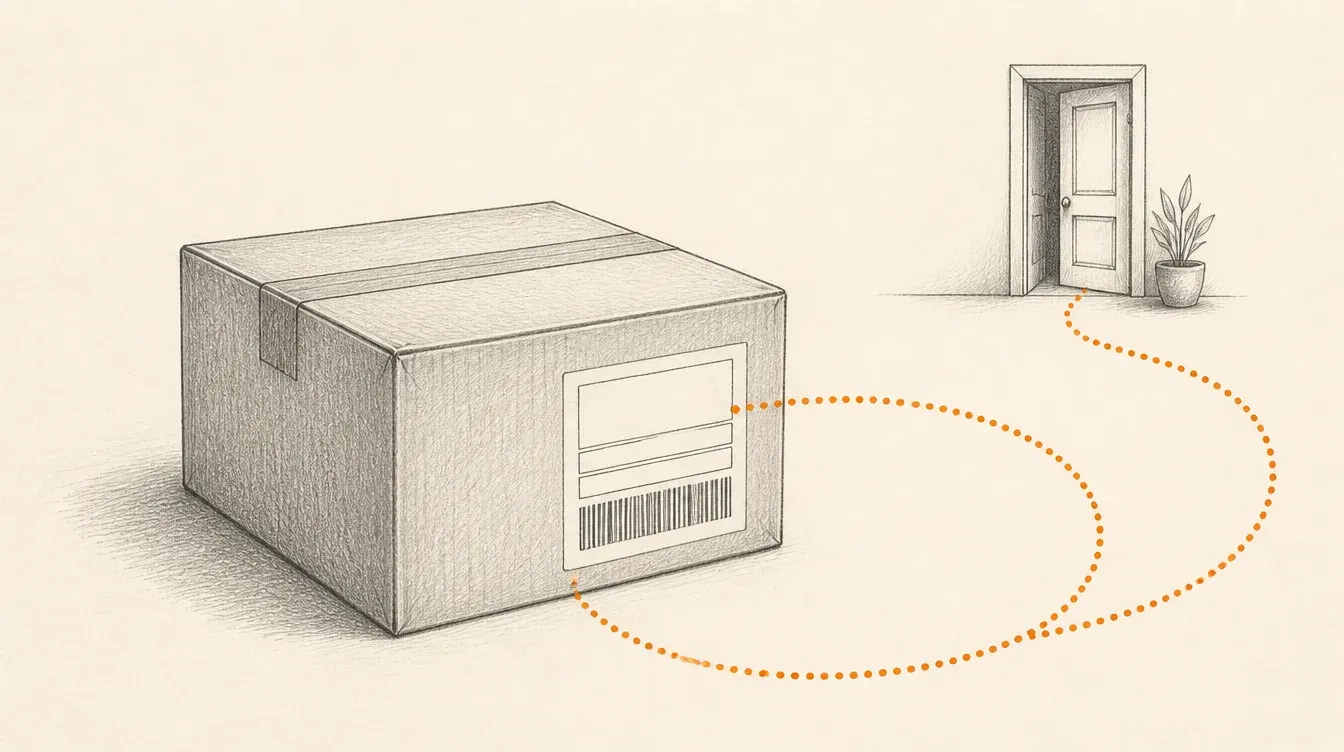
The message telling a customer their order shipped or arrived is, for almost any business with ecommerce or its own logistics, the one they open fastest and most often. Nobody ignores a shipping alert. Yet most companies treat it as a purely operational event: a status, a date, a tracking link, nothing more. It is the highest-attention moment of the entire purchase cycle, spent on information the carrier’s own app already shows.
The shipping alert gets attention no campaign can buy
An email or WhatsApp campaign competes for attention with everything else that reaches the customer that day, the same crowding effect covered in what a CDP is and when your business needs one: every added message adds to the total a person tolerates before tuning a brand out. The shipping notification competes with nothing: the customer actively looks for it because they want to know if their order arrived, and opens it without anyone asking for anything in return. That level of attention doesn’t repeat at any other touchpoint, and most businesses use it only to confirm a status the customer can already see in the carrier’s own app.
How to add retention without losing the operational job
- Keep the status and tracking link first. The operational alert isn’t replaced, it’s completed: if the customer doesn’t find what they were looking for, they lose trust in the whole channel.
- Add a behavioral signal, not a generic promotion. The order already says what the customer bought. A complementary product or a related usage tip performs better than a discount with no connection to the purchase.
- Use the “delivered” alert to ask for a review or suggest the next purchase. It’s the second highest-attention moment after dispatch, and it lands while the product is still in the customer’s hands.
- Measure conversion by event, not as a separate campaign: if the shipping message starts driving clicks to products or reviews, that metric belongs with the rest of the customer’s lifecycle, not in a standalone logistics report.
The obstacle isn’t the channel, it’s the data silo
The reason almost nobody does this isn’t a lack of will: the system that fires the shipping notification, whether it’s the logistics platform, the ERP or the ecommerce platform itself, is almost never the same one that holds the customer’s behavioral profile. They’re two records of the same person that don’t talk to each other, the same gap covered in how customer lifecycle retention gets built stage by stage: until the shipping event reaches the CDP, the highest-open message in the entire purchase cycle stays limited to what the carrier knows, not what the brand knows.
Connecting both systems doesn’t require a new channel: it requires the shipping event to land wherever the rest of the customer’s behavior already lives, so the message that’s already being opened can carry more than a status. It’s the same lifecycle automation work applied to the one touchpoint nobody measures as an opportunity today.