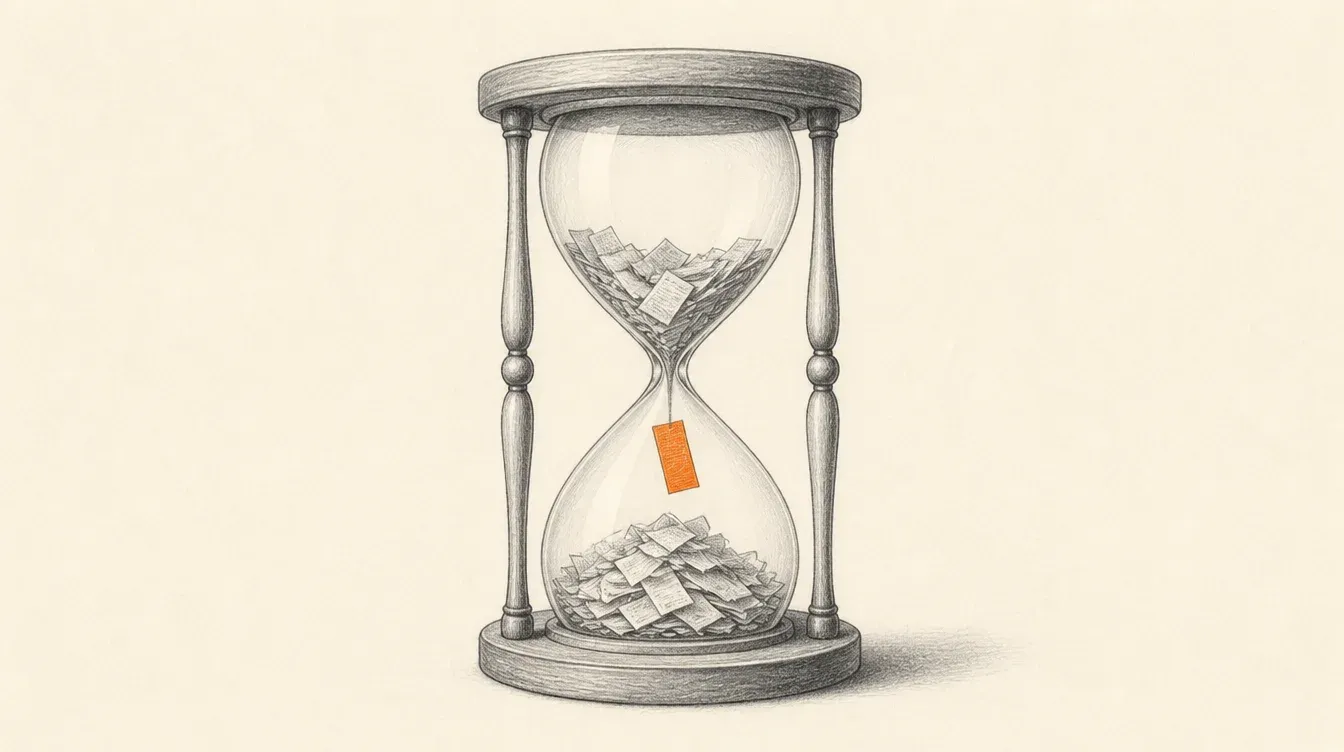
Cash still moves a real share of ecommerce in Mexico: per AMVO’s (Asociación Mexicana de Venta Online) 2024 Online Sales Study, 17% of shoppers pay at convenience stores like OXXO and 13% pay cash on delivery. When someone picks that option at checkout, the order gets created but not paid, sometimes for hours and sometimes for days, until that person goes to the store or receives the package. If your abandoned-cart rule does not tell that wait apart from a real abandonment, you are about to send the wrong message to someone who already decided to buy.
Cash is not a minor preference, it is real access
37% of Mexicans aged 18 to 70 have no formal savings account, per the 2024 National Financial Inclusion Survey (ENIF) from INEGI and the Comisión Nacional Bancaria y de Valores (CNBV). For that part of demand, paying cash at a convenience store or on delivery is not a second choice: it is the only way to complete the purchase. Among the four causes of cart abandonment in Mexico that AMVO tracks is exactly this: limited payment methods. So offering cash already fixes that cause. The new problem shows up one step later: what your system does with the order while that person has not paid yet.
How to separate a pending payment from real abandonment
- Use a status of its own for cash orders, separate from “abandoned.” If checkout generated a payment voucher or confirmed a cash-on-delivery order, that order is pending, not lost.
- Size the window by method, not one fixed threshold. A store payment voucher usually expires in 24 to 72 hours; a cash-on-delivery order can take several days depending on the shipping zone. The “abandoned after two hours” rule that works for card payments does not apply the same way here.
- The message during that window is a reminder, not an offer. Confirm the payment code, the location, and how much time is left. Sending a discount reopens a decision that person already made.
- Only once the window closes without payment, treat it as real abandonment and route it into the recovery flow that actually applies to someone who did not complete the purchase.
It is the same kind of mistake we separate when measuring cash on delivery in Peru: there the risk is counting an order as a sale before it is confirmed, here it is counting an order as lost before its real deadline passes. Both cases share the same root cause: the report uses a single state, paid or not paid, where the business needs a third one, pending, to avoid a wrong conclusion. Separating that state is part of the work we do in data marketing for Mexico: before optimizing the recovery flow, confirm that what it counts as abandonment actually is.
If your abandoned-cart dashboard does not separate pending cash payments from the rest, it is probably counting a sale that is still on its way as a loss.