Retention & lifecycle

Flight Delays: Why the Silence Hurts More Than the Wait

A flight delay does not break the relationship with a passenger: the silence during that delay does. The flight-ops system usually confirms a new estimated time within minutes of the event, but that data rarely reaches the profile that triggers communication, so the passenger learns about it from the airport board before any message from the airline.

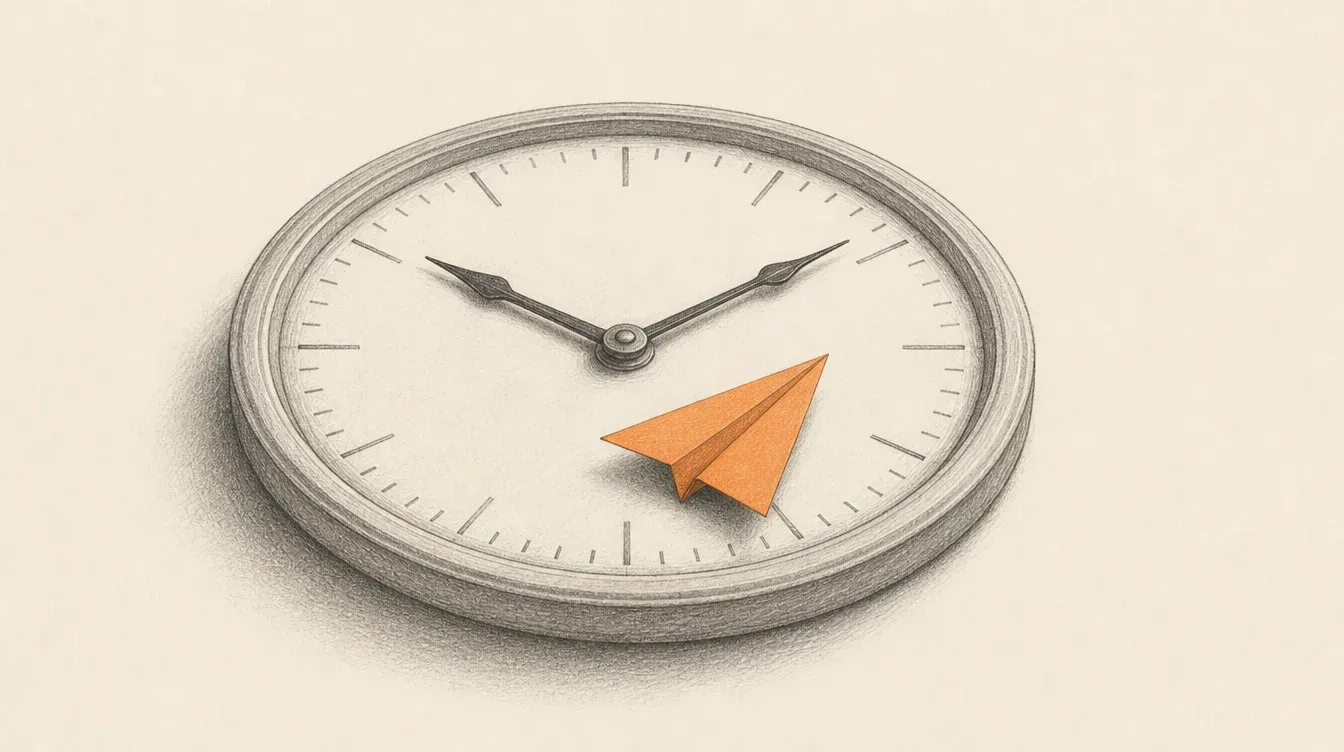
An analog clock in graphite with frozen hands, and a folded paper airplane in solid orange resting motionless on the clock face

What matters

  • Operational data about a delay (new estimated time, cause, gate) usually exists within minutes of the event, but rarely reaches the profile that triggers passenger communication proactively.
  • A passenger learns about a delay from the airport board or a gate announcement before any direct message from the airline, even though the data is already confirmed in the operational system.
  • Treating a delay as its own event, separate from the scheduled stages of the itinerary, is what lets a team trigger real-time communication instead of letting the passenger find out on their own.
  • The real cost is not the delay itself: it is that the passenger ends up looking for the information somewhere else (social media, the call center), and that load lands on the most expensive channel to staff.

A flight runs two hours late, and the passenger finds out from the airport board, not a message from the airline. Flight operations already know the new estimated time, the cause and the gate within minutes of the delay being confirmed. That data simply never reaches the profile that triggers communication with the passenger, so the airline goes quiet exactly when it most needs to speak up.

A delay is an event, not a stage of the trip

We already covered how an airline’s communication changes before and after a flight: before, the passenger wants operational certainty; after, a short window opens to measure satisfaction. That logic assumes the flight runs as scheduled. A delay breaks that sequence mid-stream: it is neither “before” nor “after,” it is an event that interrupts the itinerary while it is in progress, and it needs its own real-time trigger instead of waiting for the next planned message on the travel calendar.

Why the operational data never reaches the passenger

Flight operations know almost instantly that a flight is delayed, by how much and why: that information drives crew, gate and connection rescheduling. That same data is almost never connected to the system that talks to the passenger. The result is the airport board, the gate announcement and the counter line as the only channels, while the airline already holds, in its own systems, exactly the information the passenger is asking for out loud. It is the same gap a CDP exists to close: one profile that holds flight status alongside everything else, instead of two systems holding the same passenger, neither aware of what the other knows. Here the silo is flight status, and the passenger standing in front of the screen pays for it.

How to close the loop during a delay

  1. Connect the flight-ops system to the same passenger profile that triggers marketing or service messages, instead of keeping them separate.
  2. Fire the first alert as soon as the delay is confirmed, even without a final time yet: “we’re delayed, we’ll confirm the new time shortly” beats silence.
  3. Update the same message as the estimated time changes, instead of sending a new one for every adjustment, so the passenger does not have to piece it together from scattered messages.
  4. Track call-center or social-media volume during delays as its own metric: if it drops once proactive alerts go live, that confirms silence, not the delay, was the real cost.

It is the same principle behind treating a no-show as its own data event: here the event is the delay, and the airline almost always has the data before it needs to invent anything. It just needs to reach the person asking for it in time.

If your airline knows a flight is delayed before the passenger does, the problem is not the delay: it is that the data has not yet found its way back to the person who needs it.

Frequently asked questions

Why does silence during a flight delay hurt more than the wait itself?

Because the passenger is not just reacting to the wait: they are reacting to not knowing how long it will last or why. The operational data (new estimated time, cause, gate) is usually confirmed in the flight-ops system within minutes of the event, but if it does not reach the passenger proactively, uncertainty fills the space information should occupy.

What does it take to communicate a delay in real time?

Connecting flight status (delayed, by how much, why, new estimated time) to the same passenger profile marketing or customer service uses, not just to the operations-control system. Without that link, the team that could notify the passenger has no data, and the team that has the data does not know who to notify.

How is this different from communication before and after a flight?

Stage-based communication (booking, days before, post-flight) assumes the itinerary runs as scheduled. A delay interrupts that sequence mid-stream: it needs its own real-time trigger, and it cannot wait for the next scheduled message on the travel calendar.

Keep reading

Retention & lifecycle 2 min read

Silent churn in fintech: the account nobody cancels

In fintech, churn is rarely a cancel click. It is an account that goes quiet while staying technically active. The signals of a dormant user sit in the data.

All topics

×
Hi! 👋

How can we help you today?

Please write a message first.