Retention & lifecycle

Día de la Madre in Argentina: the gift buyer is not your next customer

The person who buys an Argentina's Mother's Day gift is not the person who will use the product: they buy once, for someone else, and their natural next purchase does not follow a regular customer's cycle. Counting them as a new signup inflates your active base and sends win-back campaigns to someone who never intended to return on their own.

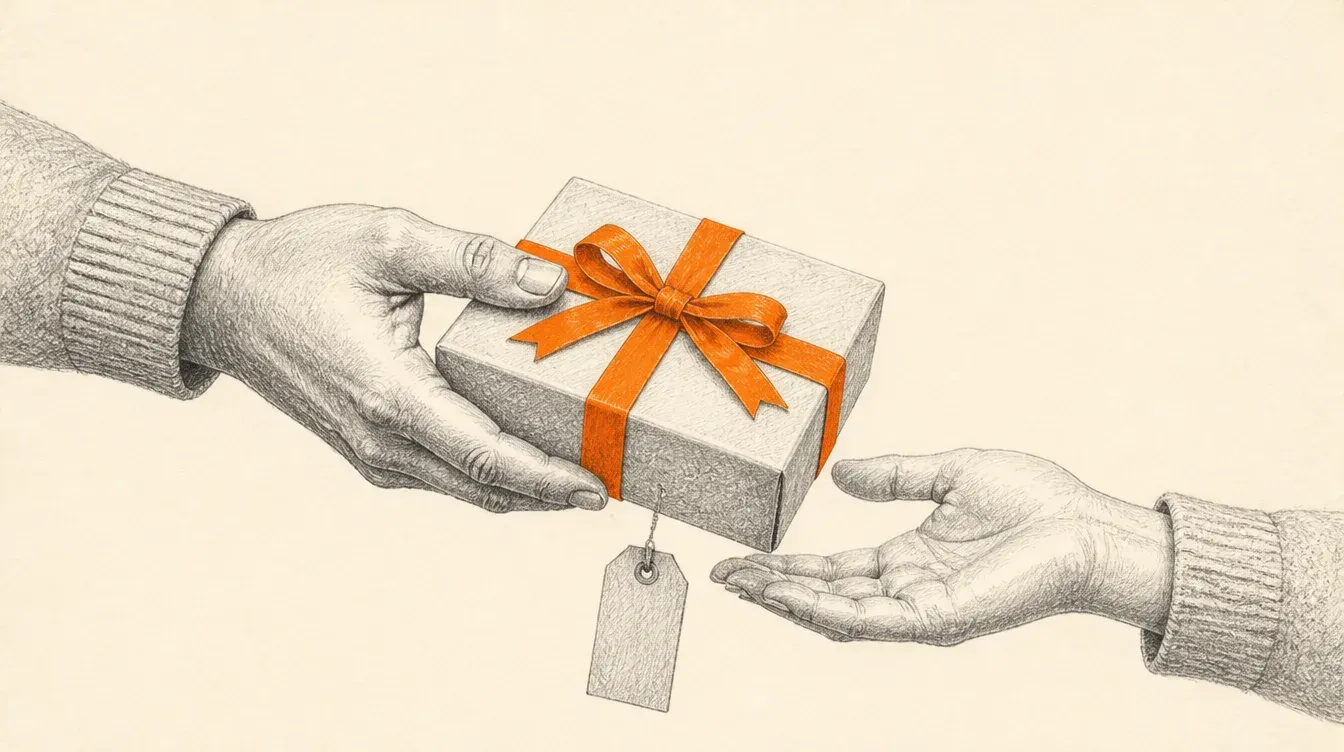
Two graphite-drawn hands exchanging a gift box tied with a solid orange ribbon and a price tag hanging from it

What matters

  • Per CAME, Argentina's 2025 Mother's Day average ticket was $37,124 pesos: up 9.8% in pesos from 2024, but with that year's inflation, real purchasing power for gifts fell 16.7%.
  • It was the fourth straight year-over-year sales decline for the date (-3.5% at constant prices), even though 83.5% of retailers ran promotions, discounts, and interest-free installments.
  • The person who buys the gift and the person who receives it are two different people: the data you keep is the buyer's, but the product gets tried by someone else who is not in your base.
  • Putting that buyer into a 30-day win-back flow assumes a repurchase intent that never existed: they bought once, for someone else, on a fixed date on the calendar.

On the third Sunday of October, someone walks into your store or your site, buys a gift for their mother, and does not show up in your base again until the same date next year. The marketing team counts it as a new signup, drops them into the usual welcome flow, and wonders sixty days later why that “new customer” never reacted to anything.

The buyer is not the one who uses the gift

In a regular purchase, buyer and user are the same person: what they bought predicts what they will need next. In an Argentina’s Mother’s Day gift, they are not. The person paying picks a product for someone else, with that other person’s own taste and size, and that second person (the one who could actually become a customer) never even lands in your CRM. The data you keep belongs to the buyer, but the product experience belongs to someone else you cannot message.

The ticket rose in pesos, not in purchasing power

Per CAME, Argentina’s 2025 Mother’s Day average ticket was $37,124 pesos, up 9.8% from 2024. Read on its own, that looks like a good date. But with that period’s inflation, the same ticket represented 16.7% less real purchasing power for gifts: the fourth straight year-over-year sales decline for the date (-3.5% at constant prices), even though 83.5% of retailers went out with promotions, discounts, and interest-free installments. The average ticket also inflates with installments on other dates on Argentina’s calendar: the mechanism here is different (inflation, not financing), but the reading error is the same, looking at the peso figure without adjusting it.

How to stop treating this buyer like a new customer

  1. Tag the purchase as an occasion gift, crossing date and product category, not just order value. You do not need a new checkout field if the pattern is already recognizable.
  2. Pull that buyer out of the standard win-back flow. They already met their goal: they are not coming back in 30 or 60 days because they never intended to buy again, they intended to gift once.
  3. If you can identify who received the gift (for example, with a welcome code in the packaging or shipment), give that person their own first touch, with no assumed purchase history.
  4. Measure the date in real terms, not just nominal ones. A ticket that rises in pesos but falls in purchasing power is not a better date than last year, it is a date that sold less gift for more money.

It is the same distinction we apply in growth in Argentina: an occasion buyer and a customer in a retention stage are not the same segment, and treating them the same spends win-back budget on someone who never had the intent the flow assumes.

Frequently asked questions

How do I tell a Mother's Day gift purchase apart from a regular order?

By crossing the purchase date (the weekend of the third Sunday of October) with product category: items that get gifted rather than self-bought, like apparel in a size that does not match the buyer's own history or cosmetics outside their usual pattern. You do not need a new field at checkout.

Should I send a win-back campaign to the person who bought the gift?

Not with the same logic you use for a regular customer. That person already met their goal (getting the gift) and is unlikely to need the product for themselves any time soon. A lighter flow, with no repurchase pressure, performs better, and a separate one if you can identify and reach whoever received the gift.

Why does it matter to separate the nominal average ticket from the real one?

Because a ticket that rises in pesos can hide a real decline if inflation ran higher over the period. In 2025, Argentina's Mother's Day ticket rose 9.8% nominally but purchasing power fell 16.7%: reading only the peso figure makes a date look successful when it actually sold less gift than the year before.

Keep reading

Retention & lifecycle 6 min read

Customer retention: the three-stage framework we use

Retention does not get fixed with a reactivation campaign. It gets fixed by placing every customer in their lifecycle stage and measuring where the base stops leaking.

Retention & lifecycle 2 min read

Why Most Black Friday Buyers Never Come Back

Cyber Monday 2025 discounts topped 30% and BNPL hit $1.03B, per Adobe. Why that buyer behaves differently from a real new customer, and how to tell them apart.

All topics

×
Hi! 👋

How can we help you today?

Please write a message first.