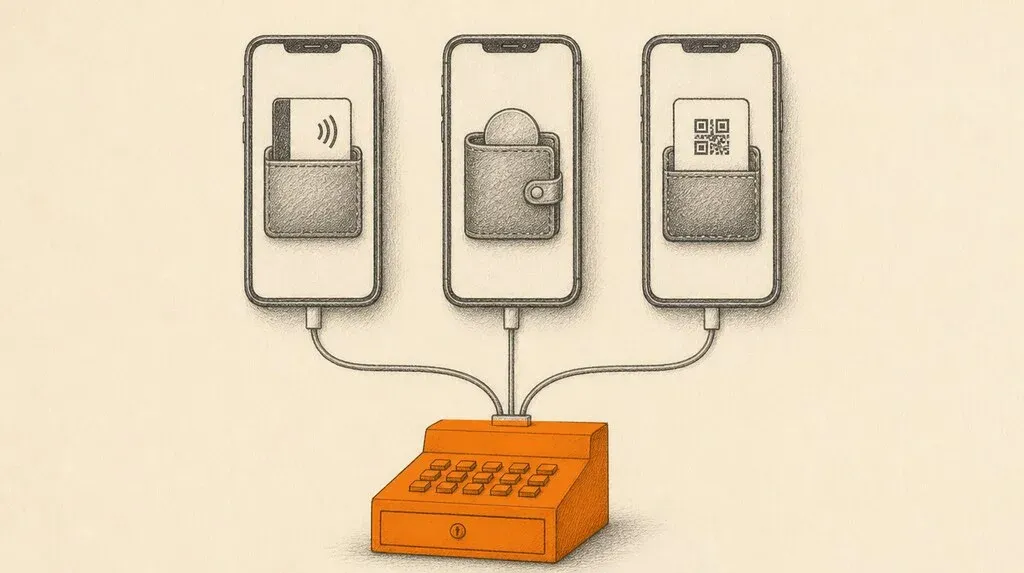
Until recently, a business with only a Yape QR on the counter lost the sale to a customer who only had Plin installed: two apps that did not talk to each other. A BCRP circular ended that problem. Yape and Plin had to interoperate by March 31, 2023, and banking apps with phone-number transfers joined on September 13 of that same year. Today one QR collects from any of them. What that rule never touched is what you keep from that sale once it closes.
What interoperability fixed, and what it didn’t
By August 2023, the BCRP was already reporting over one million daily interoperable transactions between Yape and Plin, around 30 million a month, according to Paul Castillo, the central bank’s manager of Monetary Operations and Financial Stability, speaking at AmCham Peru’s Regulatory Bodies Forum. The volume confirms the problem the rule targeted was real: before 2023, the wallet you didn’t have installed was a sale you didn’t close.
What interoperability doesn’t create is a single record of who bought from you. Each wallet still keeps that transaction inside its own app. Collect through Yape, a bank transfer and Plin, and you effectively hold three separate payment histories that never cross each other, even if all three land in the same account.
The customer pays through one app, you see it in another
What the transaction leaves you with is still, generally, the phone number tied to the payment, same as in any wallet sale. The difference from before 2023 is that number can now arrive through any of several apps, each with its own history. To know if the customer who paid you today through Yape is the same one who paid last week through a bank transfer, someone has to check both apps and match the number by hand. Nobody does that for every sale, so that repeat business stays invisible.
Three simple steps, no new system required, to stop losing that signal:
- Log the number, not just the amount. When you review the day’s payments, write the phone number tied to each one into a single spreadsheet, regardless of which app brought it in.
- Cross-check before you launch a campaign. Before sending a win-back message, check whether that number already shows up in another of your collection apps: the customer who looks “inactive” on Yape might still be buying through bank transfer.
- Layer WhatsApp on top of the same number. The phone number a wallet leaves you is the same one you use to build loyalty without asking anyone to sign up.
None of this requires dropping any of the apps you collect through: it requires not treating each one as the only place your customer data lives. Unifying those histories into a single record, regardless of which wallet each person used, is exactly the diagnosis we start from in data marketing in Peru: before automating a campaign, the data from every sale needs to live in one place, not scattered across three apps that don’t talk to each other.